
Start the new year with clarity, confidence, and actionable skills to make 2026 your most effective year yet. Thursday Gathering #39 brings together founders, professionals, creatives, and innovators for an evening of interactive workshops and expert insights to help you communicate, lead, and make strategic decisions with impact.

In the Demo Table zone you will discover various products, technologies and projects being presented by the founders or startup-representatives.
In the Info Table zone you will find out about projects, organisations and ideas.
Want to present your organisation? Send us an application!
However remember, this is NO HARD SALES zone.
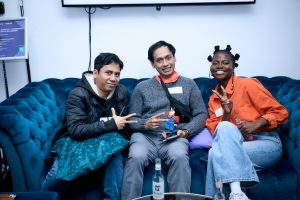
Unwind, connect, and vibe to the rhythm! This lively session blends casual networking with great music, offering the perfect atmosphere to meet fellow innovators, exchange ideas, and forge new collaborations. Grab a drink, enjoy the beats, and build meaningful connections in a relaxed, energetic setting.

At networking events, you often have just a few sentences to introduce yourself and your project. The way you deliver those lines can make the difference between being remembered or quickly forgotten. This workshop helps participants find the right balance of confidence, clarity, and authenticity, so their introduction leaves a strong and positive impression.
By the end of the session, participants will:
- Learn how to structure a short and effective self-introduction.
- Discover techniques to speak with confidence, even under pressure.
- Practice delivering their introduction with clarity and presence.
- Receive feedback to make their message memorable.
This is not a lecture, but an active and experiential session. Each participant is invited to engage, practice, and give as well as receive feedback. Target group Professionals, entrepreneurs, and creatives attending networking events who want to stand out with a confident and clear introduction.
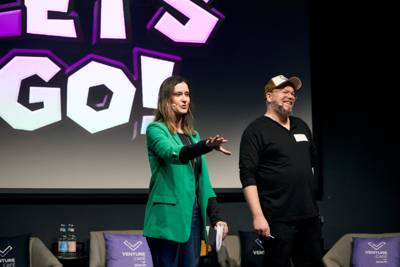
This session is about entering 2026 with confidence understood not as motivation or certainty, but as clarity, self-trust and the ability to stay regulated under pressure. Through a science-based and practical framework, participants explore why confidence erodes under mental overload and unresolved demands, and how it can be rebuilt through calm, consistency and small sustainable commitments. The session helps reduce internal friction, restore psychological stability and leave participants with a realistic, grounded sense of confidence rooted in their capacity to handle what comes next.
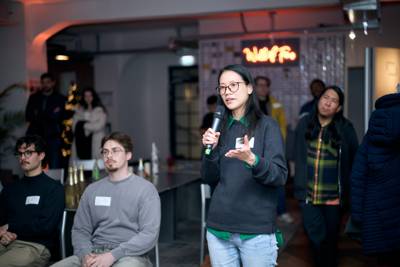
Innovators and startupfounders learn diagnostic frameworks that identifyexactly where their narrative fails to land—whether they're pitching investors, talking to press, selling tocustomers, or engaging regulators and KOLs.
Most founders get vague feedback on theircommunication: "Be more compelling," "Clarify yourstory." This workshop tells you how to do it. I teach diagnostic frameworks that help identify the specific cognitive or narrative levers undermining your message, then show you how to address them across all contexts. Using the 7 Levers of Rapid Resonance(TM) and 6-Senses framework (TM) (including the proprietary CIVIC evaluation criteria), participants learn visibility engineering, the practice of systematically diagnosing and optimising founder narratives using cognitive psychology and narrative science. This workshop isn't pitch practice. It's infrastructure work. By the end of the workshop, you'll realise that the same diagnostics that improve your investor pitch also fix your media sound bites, customer conversations, and regulatory positioning.

As AI tools become more capable, how can leaders and creators use them effectively without overreliance? This session explores practical applications of AI for sensemaking, forecasting, and productivity across startups, corporations, and academia. Each panelist shares a concrete case from their sector to illustrate both opportunities and limitations. Attendees will also participate in an interactive segment, testing AI prompts for strategy, hiring, and innovation decisions, while the panel highlights key tradeoffs, judgment calls, and the boundaries of AI-driven decision-making in 2026.
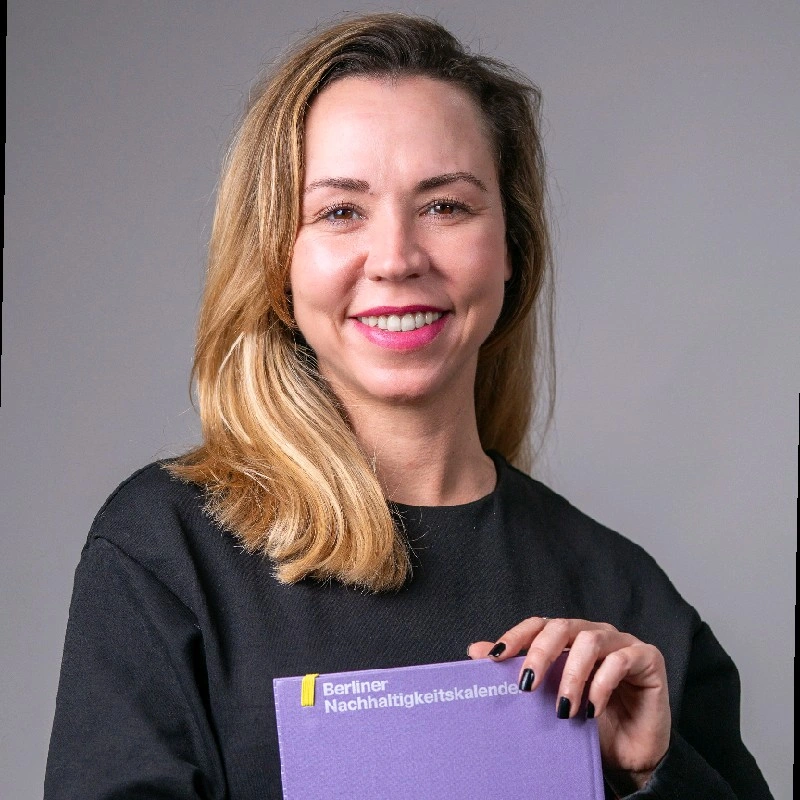
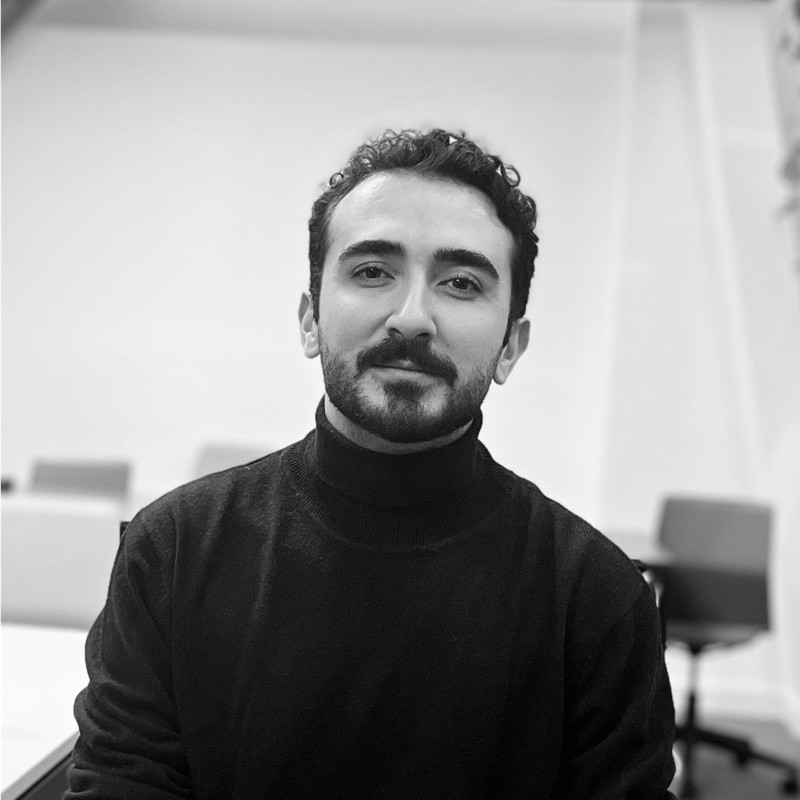
I built my foundation in software engineering at Azad University of Tabriz in 2011 and gained early experience at Adak Pey Company, where I worked with Python scripts to improve reporting and make workflows faster. I recently completed my Master’s in IT Management at BSBI in Berlin, in collaboration with the University for the Creative Arts. My academic focus included Digitalization, IT management, data visualization, and machine learning, with practical projects such as cleaning datasets with Python and using Tableau to drive digital transformation insights. My thesis focused on Explainable AI (XAI) and ethical digital transformation. After moving to Berlin for my master’s, I worked as a mentor and instructor at Masterschool, where newcomers to tech learned Python, APIs, debugging, testing, AI engineering, LLM APIs and workflows, and collaborative coding. I ran hands-on sessions, supported students during hackathons, and guided teams through brainstorming, development plans, and code skeletons — basically helping them turn chaos into something that actually runs. Along the way, I kept digging deeper into the things I genuinely enjoy: AI workflows, automation, and building tools that make life easier (for me first, honestly — and then for everyone else). I spent a lot of time researching for my thesis and for side projects where I could apply AI automation, data processing, and practical Python engineering. Even small improvements matter to me — I like the feeling of making something smoother, smarter, or just less annoying. Now I’m looking for opportunities where I can combine my software engineering background with Python development, AI-driven automation, and problem-solving to build tools, systems, and products that actually help people and make processes more efficient.







Compliance Expert | AI Ethics Researcher | Redefining Corporate Accountability in the Age of Artificial Companionship With over a decade of experience in compliance, corporate governance, and regulatory strategy, I’ve led cross-sector initiatives that safeguard ethical integrity while enabling innovation. Today, I’m leveraging that expertise to address one of the most urgent questions of our time: How should corporations be held accountable for the emotional and ethical implications of AI—especially when used for human-like companionship? As a doctoral researcher, I am currently developing a new framework that redefines Corporate Social Responsibility (CSR) in the context of Large Language Models (LLMs) and their use in emotionally charged environments. My work explores not just regulation, but the profound ethical terrain of trust, dependency, and human-AI interaction—grounding it all in real-world compliance principles. What sets me apart is the fusion of deep regulatory knowledge with a forward-thinking vision for ethical tech. I don’t just analyze frameworks—I build them. I don’t just interpret rules—I ask the hard questions that shape them. If you're passionate about the future of AI governance, ethics, or sustainability, let’s connect. The future isn’t just being built—it’s being responsibly designed.
Start the new year with clarity, confidence, and actionable skills to make 2026 your most effective year yet. Thursday Gathering #39 brings together founders, professionals, creatives, and innovators for an evening of interactive workshops and expert insights to help you communicate, lead, and make strategic decisions with impact.
In the Demo Table zone you will discover various products, technologies and projects being presented by the founders or startup-representatives.
In the Info Table zone you will find out about projects, organisations and ideas.
Want to present your organisation? Send us an application!
However remember, this is NO HARD SALES zone.
Unwind, connect, and vibe to the rhythm! This lively session blends casual networking with great music, offering the perfect atmosphere to meet fellow innovators, exchange ideas, and forge new collaborations. Grab a drink, enjoy the beats, and build meaningful connections in a relaxed, energetic setting.
At networking events, you often have just a few sentences to introduce yourself and your project. The way you deliver those lines can make the difference between being remembered or quickly forgotten. This workshop helps participants find the right balance of confidence, clarity, and authenticity, so their introduction leaves a strong and positive impression.
By the end of the session, participants will:
- Learn how to structure a short and effective self-introduction.
- Discover techniques to speak with confidence, even under pressure.
- Practice delivering their introduction with clarity and presence.
- Receive feedback to make their message memorable.
This is not a lecture, but an active and experiential session. Each participant is invited to engage, practice, and give as well as receive feedback. Target group Professionals, entrepreneurs, and creatives attending networking events who want to stand out with a confident and clear introduction.
This session is about entering 2026 with confidence understood not as motivation or certainty, but as clarity, self-trust and the ability to stay regulated under pressure. Through a science-based and practical framework, participants explore why confidence erodes under mental overload and unresolved demands, and how it can be rebuilt through calm, consistency and small sustainable commitments. The session helps reduce internal friction, restore psychological stability and leave participants with a realistic, grounded sense of confidence rooted in their capacity to handle what comes next.
Innovators and startupfounders learn diagnostic frameworks that identifyexactly where their narrative fails to land—whether they're pitching investors, talking to press, selling tocustomers, or engaging regulators and KOLs.
Most founders get vague feedback on theircommunication: "Be more compelling," "Clarify yourstory." This workshop tells you how to do it. I teach diagnostic frameworks that help identify the specific cognitive or narrative levers undermining your message, then show you how to address them across all contexts. Using the 7 Levers of Rapid Resonance(TM) and 6-Senses framework (TM) (including the proprietary CIVIC evaluation criteria), participants learn visibility engineering, the practice of systematically diagnosing and optimising founder narratives using cognitive psychology and narrative science. This workshop isn't pitch practice. It's infrastructure work. By the end of the workshop, you'll realise that the same diagnostics that improve your investor pitch also fix your media sound bites, customer conversations, and regulatory positioning.
As AI tools become more capable, how can leaders and creators use them effectively without overreliance? This session explores practical applications of AI for sensemaking, forecasting, and productivity across startups, corporations, and academia. Each panelist shares a concrete case from their sector to illustrate both opportunities and limitations. Attendees will also participate in an interactive segment, testing AI prompts for strategy, hiring, and innovation decisions, while the panel highlights key tradeoffs, judgment calls, and the boundaries of AI-driven decision-making in 2026.
I built my foundation in software engineering at Azad University of Tabriz in 2011 and gained early experience at Adak Pey Company, where I worked with Python scripts to improve reporting and make workflows faster. I recently completed my Master’s in IT Management at BSBI in Berlin, in collaboration with the University for the Creative Arts. My academic focus included Digitalization, IT management, data visualization, and machine learning, with practical projects such as cleaning datasets with Python and using Tableau to drive digital transformation insights. My thesis focused on Explainable AI (XAI) and ethical digital transformation. After moving to Berlin for my master’s, I worked as a mentor and instructor at Masterschool, where newcomers to tech learned Python, APIs, debugging, testing, AI engineering, LLM APIs and workflows, and collaborative coding. I ran hands-on sessions, supported students during hackathons, and guided teams through brainstorming, development plans, and code skeletons — basically helping them turn chaos into something that actually runs. Along the way, I kept digging deeper into the things I genuinely enjoy: AI workflows, automation, and building tools that make life easier (for me first, honestly — and then for everyone else). I spent a lot of time researching for my thesis and for side projects where I could apply AI automation, data processing, and practical Python engineering. Even small improvements matter to me — I like the feeling of making something smoother, smarter, or just less annoying. Now I’m looking for opportunities where I can combine my software engineering background with Python development, AI-driven automation, and problem-solving to build tools, systems, and products that actually help people and make processes more efficient.
Compliance Expert | AI Ethics Researcher | Redefining Corporate Accountability in the Age of Artificial Companionship With over a decade of experience in compliance, corporate governance, and regulatory strategy, I’ve led cross-sector initiatives that safeguard ethical integrity while enabling innovation. Today, I’m leveraging that expertise to address one of the most urgent questions of our time: How should corporations be held accountable for the emotional and ethical implications of AI—especially when used for human-like companionship? As a doctoral researcher, I am currently developing a new framework that redefines Corporate Social Responsibility (CSR) in the context of Large Language Models (LLMs) and their use in emotionally charged environments. My work explores not just regulation, but the profound ethical terrain of trust, dependency, and human-AI interaction—grounding it all in real-world compliance principles. What sets me apart is the fusion of deep regulatory knowledge with a forward-thinking vision for ethical tech. I don’t just analyze frameworks—I build them. I don’t just interpret rules—I ask the hard questions that shape them. If you're passionate about the future of AI governance, ethics, or sustainability, let’s connect. The future isn’t just being built—it’s being responsibly designed.